

What is the production capacity of a cnc centerless grinder in a factory?
May 14, 2026
As a supplier of a CNC centerless grinder factory, I often get asked about the production capacity of these remarkable machines. In this blog post, I'll delve into the factors that influence the production capacity of a CNC centerless grinder and provide insights based on my experience in the industry.
Understanding CNC Centerless Grinders
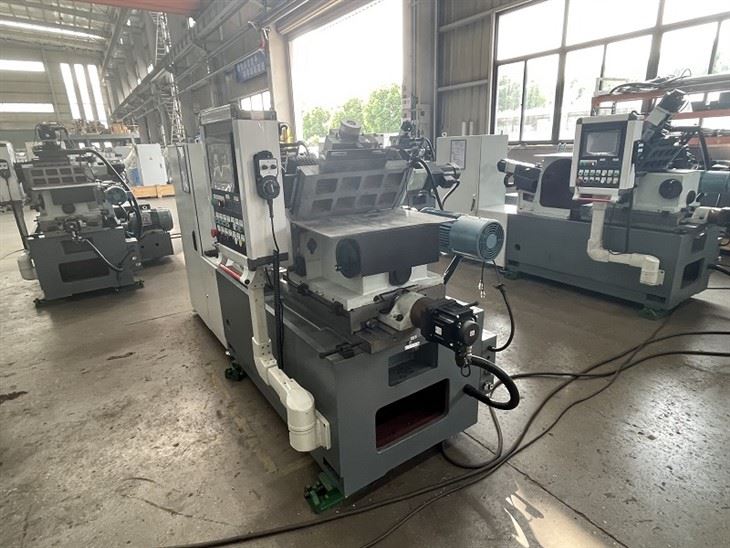
Before we discuss production capacity, let's briefly understand what CNC centerless grinders are. A CNC Centerless Grinders is a precision machining tool used to grind cylindrical workpieces without the need for a center hole. This type of grinder consists of a grinding wheel, a regulating wheel, and a work rest blade. The grinding wheel removes material from the workpiece, while the regulating wheel controls the rotation and feed rate of the workpiece. The work rest blade supports the workpiece during the grinding process.
CNC (Computer Numerical Control) technology has revolutionized the centerless grinding process by allowing for precise control of the grinder's movements and parameters. This results in higher accuracy, repeatability, and productivity compared to traditional manual grinders. CNC Centerless Grinding Machine are widely used in various industries, including automotive, aerospace, medical, and manufacturing, to produce high-quality cylindrical components such as shafts, pins, and rods.
Factors Affecting Production Capacity
The production capacity of a CNC centerless grinder is influenced by several factors, including:
1. Machine Specifications
- Grinding Wheel Size and Speed: The size and speed of the grinding wheel play a crucial role in determining the material removal rate. Larger grinding wheels can cover more surface area, allowing for faster material removal. Higher wheel speeds also increase the cutting efficiency, resulting in higher production rates.
- Regulating Wheel Speed and Feed Rate: The regulating wheel controls the rotation and feed rate of the workpiece. By adjusting the regulating wheel speed and feed rate, operators can optimize the grinding process for different workpiece materials and geometries. Faster feed rates can increase production capacity, but they must be balanced with the quality requirements of the finished product.
- Power and Rigidity: The power and rigidity of the grinder affect its ability to handle heavy cutting loads and maintain stability during the grinding process. A more powerful and rigid machine can operate at higher speeds and feed rates, resulting in increased production capacity.
2. Workpiece Material and Geometry
- Material Hardness and Toughness: The hardness and toughness of the workpiece material influence the grinding process. Harder materials require more energy to remove material, which can slow down the production rate. Additionally, tough materials may cause the grinding wheel to wear more quickly, requiring more frequent wheel dressing and replacement.
- Workpiece Diameter and Length: The diameter and length of the workpiece also affect the production capacity. Larger diameter workpieces require more time to grind, as the grinding wheel must cover a larger surface area. Longer workpieces may also require multiple passes or a slower feed rate to ensure uniform grinding.
- Workpiece Tolerance and Surface Finish Requirements: Tighter tolerances and higher surface finish requirements typically require more precise grinding operations, which can reduce the production rate. Operators may need to use slower feed rates, lower wheel speeds, or additional grinding passes to achieve the desired quality.
3. Grinding Process and Tooling
- Grinding Method: There are several grinding methods available for centerless grinding, including through-feed, in-feed, and plunge grinding. Each method has its own advantages and limitations, and the choice of method depends on the workpiece geometry and production requirements. Through-feed grinding is the most common method for high-volume production, as it allows for continuous grinding of multiple workpieces.
- Grinding Wheel Selection: The selection of the grinding wheel is critical for achieving optimal production capacity and quality. Different grinding wheel materials, grit sizes, and bond types are available, each designed for specific workpiece materials and grinding applications. Using the right grinding wheel can improve the material removal rate, reduce wheel wear, and enhance the surface finish of the workpiece.
- Tooling and Fixturing: Proper tooling and fixturing are essential for ensuring accurate and efficient grinding operations. Workpiece holders, chucks, and fixtures must be designed to securely hold the workpiece in place during the grinding process. Additionally, the use of automated loading and unloading systems can significantly increase the production capacity by reducing the time required for manual handling.
4. Operator Skill and Experience
- Training and Expertise: The skill and experience of the operator play a significant role in the production capacity of a CNC centerless grinder. A well-trained operator can optimize the grinding process, select the appropriate tooling and parameters, and troubleshoot any issues that may arise during the operation. Regular training and professional development can help operators stay up-to-date with the latest grinding techniques and technologies.
- Maintenance and Setup: Proper maintenance and setup of the grinder are essential for ensuring consistent performance and production capacity. Operators should follow the manufacturer's recommended maintenance schedule, including regular cleaning, lubrication, and inspection of the machine. Additionally, accurate setup of the grinder, including tool alignment and workpiece positioning, is crucial for achieving the desired quality and production rates.
Calculating Production Capacity
To calculate the production capacity of a CNC centerless grinder, you need to consider the factors mentioned above and use the following formula:
Production Capacity (pieces per hour) = (Grinding Time per Piece + Loading/Unloading Time per Piece) x 60 minutes
The grinding time per piece can be calculated based on the material removal rate, the volume of material to be removed, and the grinding parameters. The loading/unloading time per piece depends on the type of workpiece, the tooling used, and the automation level of the machine.
For example, let's assume that a CNC centerless grinder can remove 1 cubic inch of material per minute, and the workpiece requires the removal of 0.5 cubic inches of material. The grinding time per piece would be 0.5 minutes. If the loading/unloading time per piece is 0.2 minutes, the total time per piece would be 0.7 minutes. Using the formula above, the production capacity would be (1 / 0.7) x 60 = 85.7 pieces per hour.

Maximizing Production Capacity
To maximize the production capacity of a CNC centerless grinder, consider the following tips:
- Optimize the Grinding Process: Continuously evaluate and optimize the grinding process to improve efficiency and reduce cycle times. This may involve adjusting the grinding parameters, selecting the appropriate tooling, and using advanced grinding techniques.
- Invest in Automation: Automation can significantly increase the production capacity by reducing the time required for manual handling and setup. Consider using automated loading and unloading systems, robotic arms, and conveyor belts to streamline the production process.
- Regular Maintenance and Calibration: Proper maintenance and calibration of the grinder are essential for ensuring consistent performance and accuracy. Follow the manufacturer's recommended maintenance schedule, and regularly calibrate the machine to maintain its precision.
- Train and Develop Operators: Provide comprehensive training and professional development opportunities for operators to enhance their skills and knowledge. A well-trained operator can optimize the grinding process, troubleshoot issues, and maximize the production capacity of the machine.
- Use High-Quality Tooling and Materials: Invest in high-quality grinding wheels, tooling, and workpiece materials to improve the efficiency and quality of the grinding process. Using the right tooling and materials can reduce wheel wear, increase material removal rates, and enhance the surface finish of the workpiece.
Conclusion
The production capacity of a High Precision CNC Centerless Grinder is influenced by several factors, including machine specifications, workpiece material and geometry, grinding process and tooling, and operator skill and experience. By understanding these factors and implementing the tips mentioned above, you can maximize the production capacity of your CNC centerless grinder and achieve higher productivity and profitability.
If you're interested in learning more about our CNC centerless grinders or have any questions about production capacity, please feel free to contact us. Our team of experts is ready to assist you in selecting the right grinder for your specific needs and providing you with the support and guidance you need to optimize your production process.
References
- "Centerless Grinding Handbook" by Peter H. Gillespie
- "CNC Machining Technology" by John A. Reha and Joseph F. Holzer
- "Manufacturing Engineering and Technology" by Serope Kalpakjian and Steven R. Schmid