

How to choose the right grinding wheel for a high precision CNC centerless grinder machine?
Jul 06, 2026
Hey there! As a supplier of High Precision CNC Centerless Grinder Machines, I often get asked about how to choose the right grinding wheel for these machines. It's a crucial decision that can significantly impact the performance and quality of your grinding operations. In this blog, I'll share some tips and insights to help you make an informed choice.

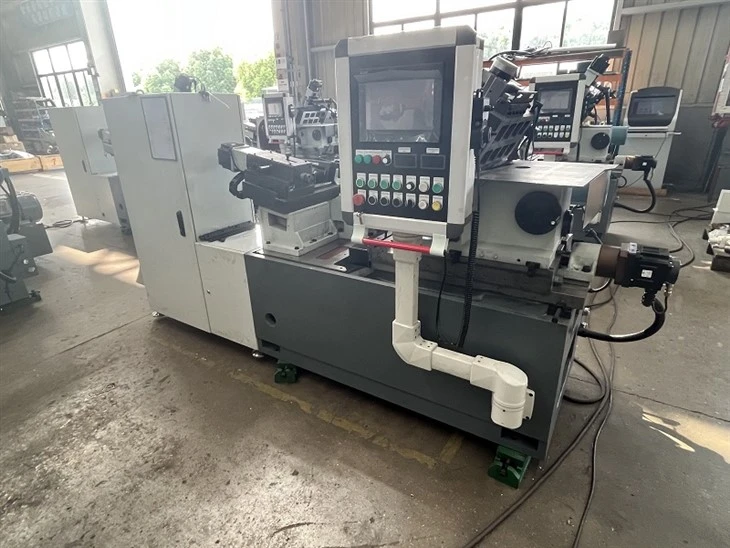
First off, let's understand the basics. A grinding wheel is a tool used to remove material from a workpiece through abrasion. In a high precision CNC centerless grinder machine, the grinding wheel plays a vital role in achieving the desired surface finish, dimensional accuracy, and productivity. So, choosing the right one is no small feat.
1. Consider the Material of the Workpiece
The material of the workpiece is one of the most important factors to consider when selecting a grinding wheel. Different materials have different hardness, toughness, and abrasion resistance, which require different types of grinding wheels.
- Hard Materials: For hard materials like hardened steel, carbide, and ceramics, you'll need a grinding wheel with a high hardness and abrasion resistance. Wheels made from aluminum oxide or silicon carbide are commonly used for these materials. Aluminum oxide wheels are suitable for general-purpose grinding, while silicon carbide wheels are better for grinding hard and brittle materials.
- Soft Materials: Soft materials such as aluminum, brass, and copper require a grinding wheel with a lower hardness and a more open structure. This helps prevent the wheel from loading up with the soft material and ensures efficient grinding. Resin-bonded wheels or wheels with a high porosity are often used for soft materials.
2. Determine the Grinding Operation
The type of grinding operation you'll be performing also affects the choice of grinding wheel. Different operations, such as rough grinding, finish grinding, and form grinding, require different wheel characteristics.
- Rough Grinding: Rough grinding is used to remove a large amount of material quickly. For this operation, you'll need a grinding wheel with a coarse grit size and a high material removal rate. Coarse-grit wheels can remove material faster but may leave a rougher surface finish.
- Finish Grinding: Finish grinding is used to achieve a smooth surface finish and high dimensional accuracy. For this operation, you'll need a grinding wheel with a fine grit size and a high cutting edge density. Fine-grit wheels can produce a smoother surface finish but may have a lower material removal rate.
- Form Grinding: Form grinding is used to create complex shapes and profiles on the workpiece. For this operation, you'll need a grinding wheel with a specific shape and profile. Specialized form wheels are available for different applications, such as gear grinding, thread grinding, and tool grinding.
3. Evaluate the Wheel Grade and Structure
The grade and structure of a grinding wheel are two important characteristics that determine its performance.
- Grade: The grade of a grinding wheel refers to the strength of the bond that holds the abrasive grains together. A hard grade wheel has a strong bond and is suitable for grinding hard materials or for applications where a high material removal rate is required. A soft grade wheel has a weaker bond and is suitable for grinding soft materials or for applications where a fine surface finish is required.
- Structure: The structure of a grinding wheel refers to the spacing between the abrasive grains. A dense structure wheel has a high concentration of abrasive grains and is suitable for grinding hard materials or for applications where a high material removal rate is required. A porous structure wheel has a lower concentration of abrasive grains and is suitable for grinding soft materials or for applications where a fine surface finish is required.
4. Consider the Wheel Bond Type
The bond type of a grinding wheel is another important factor to consider. Different bond types have different properties and are suitable for different applications.
- Vitrified Bond: Vitrified bond wheels are the most commonly used type of grinding wheels. They have a high hardness, good abrasion resistance, and a stable structure. Vitrified bond wheels are suitable for a wide range of applications, including rough grinding, finish grinding, and form grinding.
- Resin Bond: Resin bond wheels are flexible and have a good self-sharpening ability. They are suitable for grinding soft materials, such as aluminum and brass, and for applications where a fine surface finish is required.
- Metal Bond: Metal bond wheels are very hard and have a high abrasion resistance. They are suitable for grinding hard materials, such as carbide and ceramics, and for applications where a high material removal rate is required.
5. Check the Wheel Size and Speed
The size and speed of the grinding wheel are also important factors to consider. The size of the wheel should be compatible with the size of the workpiece and the machine. The speed of the wheel should be within the recommended range for the wheel and the machine.
- Wheel Size: The size of the grinding wheel is usually specified by its diameter, width, and bore size. The diameter of the wheel should be large enough to cover the entire width of the workpiece. The width of the wheel should be appropriate for the type of grinding operation. The bore size of the wheel should match the spindle size of the machine.
- Wheel Speed: The speed of the grinding wheel is usually specified in revolutions per minute (RPM). The speed of the wheel should be within the recommended range for the wheel and the machine. Running the wheel at a speed higher than the recommended range can cause the wheel to break or wear out quickly. Running the wheel at a speed lower than the recommended range can result in poor grinding performance.
6. Look for Quality and Reliability
When choosing a grinding wheel, it's important to look for quality and reliability. A high-quality grinding wheel will provide better performance, longer life, and more consistent results. Look for wheels that are made from high-quality materials and are manufactured to strict quality standards.
- Brand Reputation: Choose a grinding wheel from a reputable brand that has a proven track record of producing high-quality products. Brands with a good reputation are more likely to provide reliable products and excellent customer service.
- Certifications: Look for grinding wheels that are certified by recognized organizations, such as the International Organization for Standardization (ISO) or the American National Standards Institute (ANSI). These certifications ensure that the wheels meet certain quality and safety standards.
- Customer Reviews: Read customer reviews and testimonials to get an idea of the performance and reliability of the grinding wheels. Customer reviews can provide valuable insights into the real-world performance of the wheels and help you make an informed decision.
Conclusion
Choosing the right grinding wheel for a high precision CNC centerless grinder machine is a critical decision that can significantly impact the performance and quality of your grinding operations. By considering the material of the workpiece, the type of grinding operation, the wheel grade and structure, the wheel bond type, the wheel size and speed, and the quality and reliability of the wheel, you can make an informed choice and select the best grinding wheel for your needs.
If you're in the market for a High Precision CNC Centerless Grinding Machine or CNC Centerless Grinding Equipment, or if you have any questions about choosing the right grinding wheel, feel free to reach out to us. We're here to help you find the best solutions for your grinding needs.
References
- "Grinding Wheel Selection Guide," Norton Abrasives.
- "Abrasive Grinding Wheels: Types, Applications, and Selection," Machining Doctor.
- "How to Choose the Right Grinding Wheel," Modern Machine Shop.