

What is the role of the grinding wheel in a precision centerless grinder?
Dec 24, 2025
In the world of precision machining, the precision centerless grinder stands out as a remarkable piece of equipment. As a supplier of precision centerless grinders, I've witnessed firsthand the significant role of each component in these machines, with the grinding wheel being one of the most critical. This blog will delve into the role of the grinding wheel in a precision centerless grinder, exploring its functionality, types, and influence on the overall grinding process.
The Fundamental Function of the Grinding Wheel
At its core, the grinding wheel in a precision centerless grinder is responsible for removing material from the workpiece to achieve the desired shape, size, and surface finish. Unlike other grinding applications, centerless grinding does not rely on a center hole or spindle to support the workpiece. Instead, the workpiece is held between the grinding wheel, regulating wheel, and a work rest blade. The grinding wheel rotates at a high speed, and its abrasive grains cut into the workpiece, gradually removing small chips of material.
The material removal process is a complex one, influenced by several factors such as the grinding wheel's speed, feed rate, and the type of abrasive used. The high rotational speed of the grinding wheel creates a large number of cutting edges, which continuously interact with the workpiece surface. This results in a rapid and efficient material removal rate, making centerless grinding a popular choice for high - volume production.
Types of Grinding Wheels and Their Applications
There are various types of grinding wheels available for precision centerless grinders, each designed for specific applications. The choice of grinding wheel depends on factors such as the material of the workpiece, the required surface finish, and the grinding operation.
Aluminum Oxide Grinding Wheels
Aluminum oxide is a common abrasive material used in grinding wheels. These wheels are known for their versatility and are suitable for grinding a wide range of materials, including steel, cast iron, and non - ferrous metals. Aluminum oxide grinding wheels are relatively hard and can withstand high grinding pressures, making them ideal for rough grinding operations where a large amount of material needs to be removed quickly.
Silicon Carbide Grinding Wheels
Silicon carbide grinding wheels are harder and more brittle than aluminum oxide wheels. They are commonly used for grinding hard and brittle materials such as ceramics, glass, and stone. Silicon carbide offers a sharp cutting action, which is beneficial for achieving a fine surface finish. However, due to its brittleness, it may not be suitable for heavy - duty grinding applications.
Cubic Boron Nitride (CBN) Grinding Wheels
CBN is a synthetic abrasive that is second only to diamond in hardness. CBN grinding wheels are highly efficient and can maintain their sharpness for a long time. They are particularly well - suited for grinding hardened steels, tool steels, and superalloys. CBN wheels can achieve high - precision grinding results with excellent surface quality, making them a popular choice for aerospace and automotive industries.
Diamond Grinding Wheels
Diamond is the hardest known material, and diamond grinding wheels are used for grinding extremely hard materials such as carbide, glass, and ceramics. These wheels provide superior cutting performance and can produce very fine surface finishes. Diamond wheels are often used in the manufacturing of cutting tools, semiconductor components, and optical lenses.
Influence on Surface Finish and Dimensional Accuracy
The grinding wheel has a significant impact on the surface finish and dimensional accuracy of the workpiece. The surface finish of the workpiece is determined by the size and shape of the abrasive grains, as well as the grinding parameters. A finer - grained grinding wheel will generally produce a smoother surface finish, while a coarser - grained wheel is better for initial material removal.
Dimensional accuracy is also closely related to the performance of the grinding wheel. The grinding wheel must maintain its shape and size throughout the grinding process to ensure that the workpiece is ground to the correct dimensions. Any wear or damage to the grinding wheel can lead to dimensional errors in the workpiece. Regular dressing and truing of the grinding wheel are essential to maintain its shape and cutting performance.
Importance of Grinding Wheel Maintenance
To ensure the optimal performance of a precision centerless grinder, proper maintenance of the grinding wheel is crucial. Dressing and truing are two important maintenance operations. Dressing is the process of removing the dulled abrasive grains from the surface of the grinding wheel, restoring its cutting ability. Truing, on the other hand, is used to correct the shape of the grinding wheel, ensuring that it is round and flat.
Another aspect of maintenance is the selection of the appropriate grinding fluid. The grinding fluid helps to cool the grinding wheel and the workpiece, reducing the heat generated during the grinding process. It also helps to flush away the chips and prevent them from clogging the grinding wheel.
Our Precision Centerless Grinders and Compatible Grinding Wheels
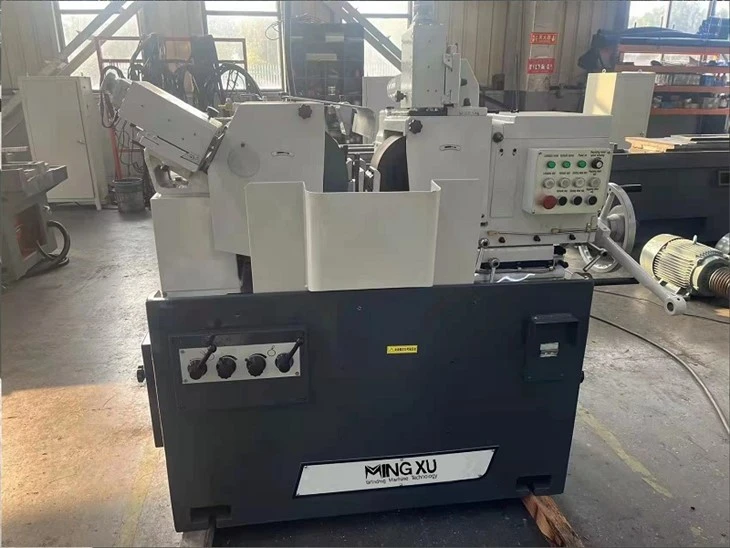
As a supplier of precision centerless grinders, we offer a range of high - quality machines, including the MX - M1040B High Precision Centerless Grinder, MX - M10100 Precision Centerless Grinder Machine, and MX - M1083B Automatic Centerless Grinding Machine. These machines are designed to work with a variety of grinding wheels, allowing our customers to choose the most suitable one for their specific needs.
With our precision centerless grinders, combined with the right grinding wheels, our customers can achieve high - precision grinding results, ensuring the quality and productivity of their manufacturing processes.
Contact Us for Procurement
If you are interested in learning more about our precision centerless grinders or need assistance in selecting the right grinding wheel for your application, please feel free to contact us. Our team of experts is ready to provide you with detailed information and support to help you make the best decision for your business.

References
- "Centerless Grinding Handbook", Various Authors
- "Manufacturing Engineering and Technology", S. Kalpakjian, S. Rajagopal
- "Grinding Technology: Theory and Applications of Machining with Abrasives", B. R. Maruda, T. Wegner, W. Z. Misiolek