

What's the price of a bench - top grinder machine?
Oct 09, 2026
A bench - top grinder machine is an essential tool in many workshops, whether it's a professional manufacturing facility or a DIY enthusiast's garage. As a supplier of grinder machine prices, I've had the opportunity to understand the various factors that influence the cost of these machines. In this blog, I'll delve into what determines the price of a bench - top grinder machine and provide some insights into the market.
Factors Affecting the Price
Brand and Reputation
Well - established brands often command a premium price. Brands that have been in the market for a long time, have a reputation for quality, and offer excellent customer support are likely to be more expensive. For instance, a bench - top grinder from a brand known for its precision engineering and durability will cost more than a generic or lesser - known brand. This is because customers are willing to pay extra for the assurance of getting a reliable product. A high - end brand may invest heavily in research and development, using the latest technologies and high - grade materials in their machines. This not only enhances the performance but also the longevity of the grinder, justifying the higher price tag.
Power and Performance
The power of a bench - top grinder is measured in horsepower (HP). A grinder with higher horsepower can handle tougher materials and more demanding grinding tasks. For light - duty tasks such as sharpening small tools, a low - power grinder (around 0.5 - 1 HP) may suffice. However, for heavy - duty applications like grinding large metal pieces or working with hard alloys, a grinder with 2 HP or more is required. Naturally, a more powerful grinder will be more expensive due to the larger motor, better cooling systems to prevent overheating, and more robust construction to handle the increased stress.

The performance also includes factors like grinding speed. Grinders with variable speed settings allow users to adjust the speed according to the material being ground. For example, softer materials may require a lower speed to avoid over - heating and damage, while harder materials can tolerate higher speeds. Machines with variable speed capabilities are generally priced higher than those with fixed speeds.
Grinding Wheel Size and Quality
The size of the grinding wheel is another significant factor. Larger grinding wheels can cover a greater surface area, which means faster grinding. A bench - top grinder with a 10 - inch wheel will be more expensive than one with a 6 - inch wheel. The quality of the grinding wheel also matters. High - quality wheels made from premium abrasives can provide a smoother finish, last longer, and are more efficient at removing material. Wheels with special coatings or formulations for specific applications, such as grinding stainless steel or carbide, are also more costly.
Build Quality and Durability
The materials used in the construction of the bench - top grinder play a crucial role in its price. Grinders made from heavy - duty cast iron or steel frames are more durable and stable compared to those made from plastic or lightweight metals. A well - built grinder can withstand the vibrations and stresses of continuous use without losing its accuracy. Additionally, features like sealed bearings, which reduce friction and prevent the ingress of dust and debris, contribute to the overall durability and, therefore, the price of the machine.
Additional Features
Some bench - top grinders come with additional features that can increase their price. For example, a grinder with a built - in tool rest that can be adjusted precisely allows for more accurate grinding. A spark guard can enhance safety by containing the sparks generated during grinding. Some models also have a coolant system, which helps to keep the grinding wheel and the workpiece cool, reducing the risk of over - heating and improving the quality of the grind.
Price Ranges in the Market
In the market, bench - top grinder machines can range from relatively inexpensive models for home use to high - end, industrial - grade machines.
Entry - Level Grinders
Entry - level bench - top grinders, suitable for light - duty home use, can cost anywhere from $50 to $200. These models typically have lower power (around 0.5 - 1 HP), small grinding wheels (usually 6 inches or less), and basic features. They are often made from lighter materials and may not have the same level of precision or durability as more expensive models. However, for occasional sharpening of household tools like knives and garden shears, these inexpensive grinders can do the job.
Mid - Range Grinders
Mid - range bench - top grinders, priced between $200 and $500, offer a good balance between performance and cost. They usually have a power output of 1 - 2 HP, larger grinding wheels (around 8 inches), and more advanced features such as adjustable tool rests and better - quality bearings. These grinders are suitable for small workshops, hobbyists who work on more serious projects, or professionals who need a reliable and versatile machine for occasional use.
High - End Grinders
High - end, industrial - grade bench - top grinders can cost upwards of $500. These machines are designed for heavy - duty, continuous use in professional manufacturing settings. They have high - power motors (2 HP or more), large grinding wheels (10 inches or larger), and are built with the highest quality materials. They often come with advanced features like variable speed controls, coolant systems, and precision - engineered components. High - end grinders may also have a longer warranty period, reflecting the manufacturer's confidence in the product's durability and performance.
Our Product Offerings
As a grinder machine price supplier, we offer a wide range of bench - top grinder machines to suit different needs and budgets. We understand that every customer has unique requirements, whether it's for light - duty home use or heavy - duty industrial applications.
We have a selection of entry - level grinders that provide excellent value for money. These are perfect for those who are just starting out or need a simple tool for occasional sharpening. Our mid - range models offer increased performance and features, making them suitable for small businesses and hobbyists who demand more from their equipment.
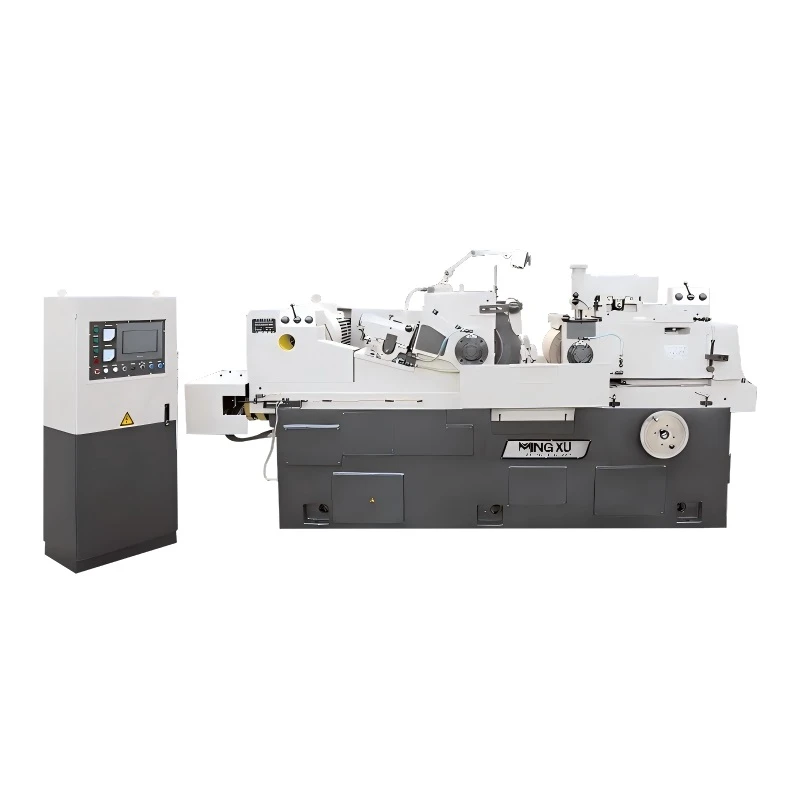
For our professional customers, we offer high - end grinders that are built to last and can handle the most challenging grinding tasks. Our High Precision Wide - Wheel Centerless Grinder is a prime example of our top - of - the - line products. It features high - precision engineering, large grinding wheels, and advanced control systems to ensure accurate and efficient grinding.
We also have the Wide - Wheel CNC Centerless Grinder, which combines the benefits of a wide wheel with the precision of computer numerical control (CNC). This grinder is ideal for large - scale production environments where consistency and accuracy are crucial.
In addition, our Wide - Wheel Centerless Grinding Machine offers a cost - effective solution for grinding long, cylindrical workpieces. It has a wide grinding wheel that can cover a large surface area, making the grinding process faster and more efficient.
Conclusion
The price of a bench - top grinder machine is determined by a variety of factors, including brand, power, grinding wheel size and quality, build quality, and additional features. Whether you're a DIY enthusiast, a small business owner, or a large - scale manufacturer, there is a bench - top grinder available to suit your needs and budget.
If you're in the market for a bench - top grinder machine, we encourage you to reach out to us. Our team of experts can help you select the right machine based on your specific requirements. We offer competitive prices and excellent customer service. Contact us today to start your procurement process and find the perfect grinder for your workshop.
References
- Anil Kumar, S. S., & Raju, B. M. (2019). Analysis of grinding forces in centerless grinding. International Journal of Advanced Manufacturing Technology, 104(9 - 12), 3837 - 3846.
- Kalpakjian, S., & Schmid, S. R. (2013). Manufacturing engineering and technology. Pearson.
- Trent, E. M., & Wright, P. K. (2000). Metal cutting. Butterworth - Heinemann.